Trump Revives Greenland Threats and Europe Troop Warnings at NATO
President Trump escalated tensions at the NATO summit, renewing demands over Greenland and floating the withdrawal of U.S. troops from Europe.
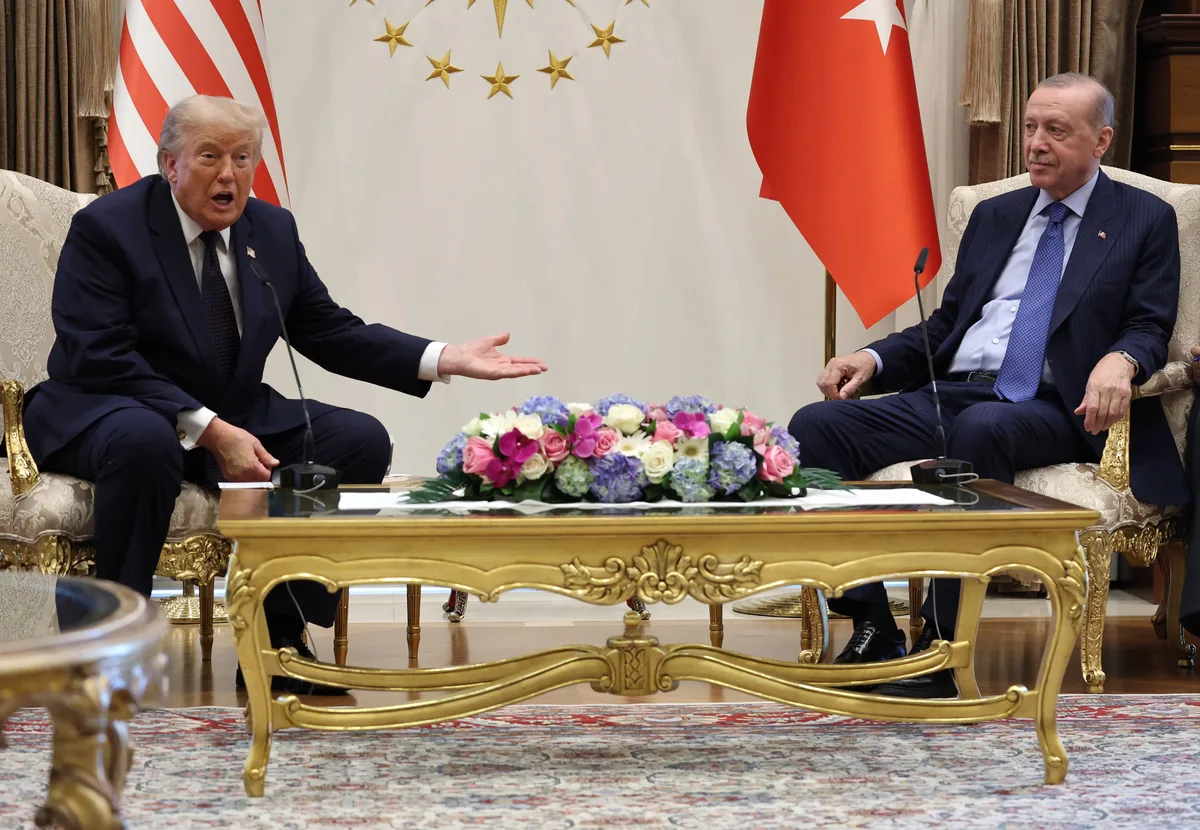
President Trump used the stage of a NATO summit to resurrect one of his most provocative foreign policy gambits, again pressing the case that the United States should take control of Greenland and suggesting that American troops stationed in Europe could be pulled back. The remarks landed at a moment when alliance cohesion is already under strain, underscoring how Trump's transactional approach to multilateral security continues to unsettle traditional partnerships.
The Greenland issue has simmered as a point of serious diplomatic friction since earlier this year, when Trump first framed U.S. control of the autonomous Danish territory as a matter of national security. The argument centers on Greenland's strategic Arctic positioning — a geography that has grown more contested as great-power competition intensifies and melting ice opens new shipping lanes and resource deposits. That framing, however, has done little to soften allied resistance to what amounts to an assertion of territorial ambition against a NATO partner.
Read more UK PM Burnham Signals Willingness to Challenge Trump Directly →
The threat to remove troops from Europe carries a separate but equally destabilizing weight. American military presence on the continent forms the backbone of NATO's collective defense posture, and any credible suggestion that Washington might reduce that commitment gives adversaries — most immediately Russia — reason to reassess their own calculations. Even if the remarks are treated as negotiating leverage rather than settled policy, the uncertainty they inject has strategic costs that are difficult to undo.
What makes this moment analytically significant is the convergence of both pressure points in a single summit setting. Trump appears to be using America's indispensable role in European security as a bargaining chip simultaneously on multiple fronts — territorial ambition, burden-sharing demands, and troop deployments — compressing what would normally be separate diplomatic tracks into a single, high-stakes confrontation with allies who have few clean options for responding without fracturing the alliance further.
Continue reading at US Top News and Analysis