Trump Asks Supreme Court to Rehear Birthright Citizenship Case
The Trump administration is making a long-shot legal bid to get the Supreme Court to revisit its birthright citizenship ruling.
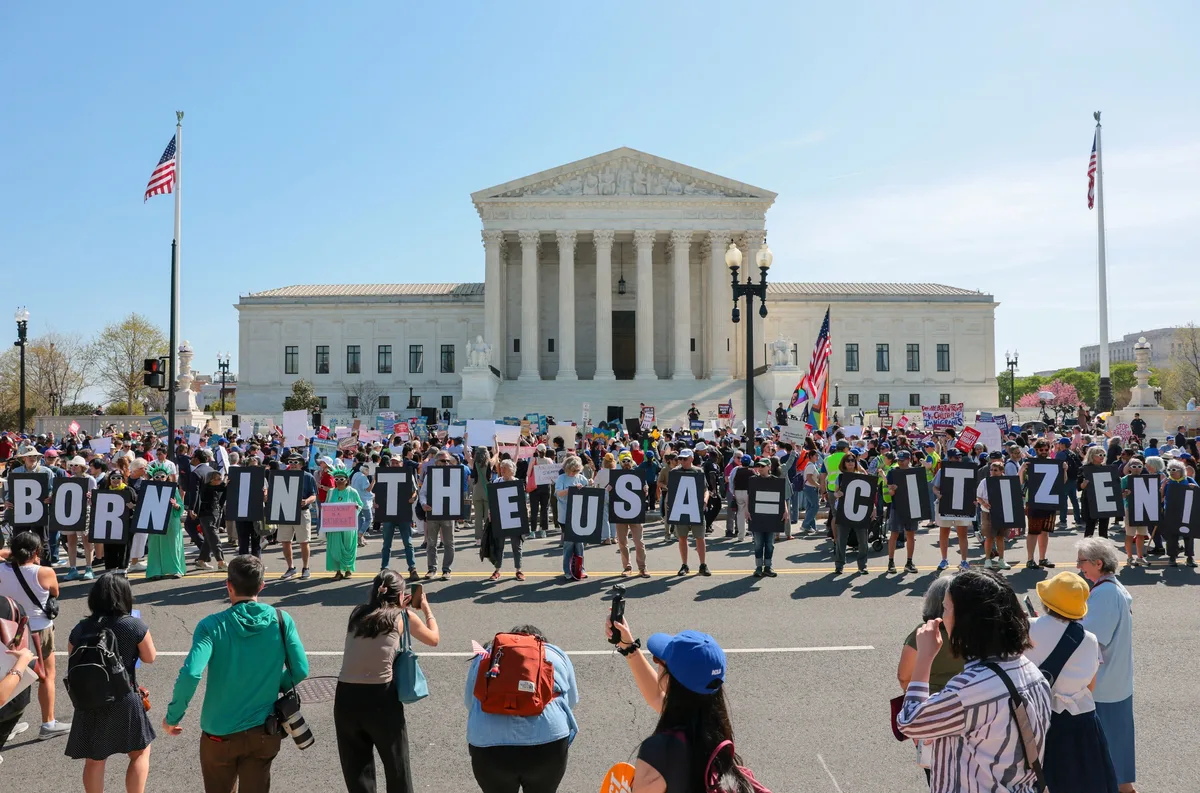
The Trump administration has filed a petition asking the Supreme Court to rehear its birthright citizenship case, a legal maneuver widely regarded as an uphill battle given how rarely the Court agrees to reconsider its own decisions. The move signals the administration's continued willingness to push constitutional boundaries on immigration policy, even when the odds of success are slim.
Birthright citizenship — the principle enshrined in the Fourteenth Amendment that anyone born on U.S. soil is automatically a citizen — has been a long-standing target of immigration restrictionists, including President Trump. Challenging it through the courts represents one of the few available avenues after legislative and executive efforts have faced repeated legal obstacles.
Read more UK PM Burnham Signals Willingness to Challenge Trump Directly →
The Supreme Court grants rehearings only in exceptional circumstances, making this petition more of a political statement than a realistic legal strategy. By pressing the case, the administration keeps the issue alive in public debate and signals to its base that it remains committed to restricting birthright citizenship, regardless of immediate legal prospects.
This is not the first time Trump has asked the Supreme Court to reconsider a high-profile ruling. He previously petitioned the Court to rehear a case in which he was found liable for sexually abusing and defaming writer E. Jean Carroll — another long-shot request that underscores a pattern of using Supreme Court petitions as part of a broader legal and political strategy.
The birthright citizenship debate touches on fundamental questions about the scope of the Fourteenth Amendment and whether Congress or the executive branch has any authority to limit its application. Legal scholars broadly agree that altering birthright citizenship would require a constitutional amendment, making the administration's court-focused approach a difficult path. Continue reading at US Top News and Analysis.