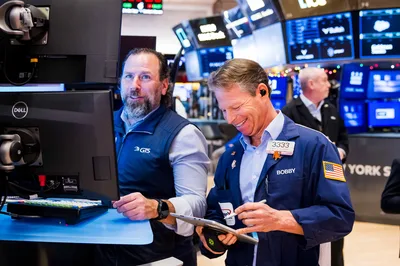
S&P 500 and Nasdaq Post Best Quarter Since 2020 Amid Iran Conflict
U.S. equity benchmarks logged their strongest quarterly gains in five years even as geopolitical tensions with Iran rattled global markets.

American stock markets delivered a surprisingly resilient performance over the most recent quarter, with the S&P 500 and Nasdaq Composite recording their best three-month gains since 2020 — a period that itself marked a historic recovery from pandemic-era lows. The results underscore a market that has grown increasingly adept at absorbing geopolitical shocks without abandoning its broader upward trajectory.
The backdrop was anything but calm. Military conflict involving Iran introduced a layer of risk that in earlier cycles might have triggered sustained selling pressure and a flight to safe-haven assets. Instead, investors appeared to look through the near-term uncertainty, betting that central bank policy, corporate earnings momentum, or both would prove more durable drivers of equity valuations than a regional conflict.
Read more Google's AI Demand Is Outpacing Its Own Capacity to Deliver →
That kind of compartmentalization — separating geopolitical noise from fundamental financial signals — has become a recurring feature of post-pandemic market behavior. Investors who sold into fear-driven headlines repeatedly missed sharp recoveries, and that institutional memory appears to be shaping portfolio decisions in real time. The Nasdaq's outperformance in particular suggests that appetite for growth and technology exposure remains robust, even when the global risk environment is elevated.
What the quarter's performance does not settle is whether this resilience reflects genuine confidence in the economic outlook or a market that has become structurally desensitized to geopolitical risk in ways that could prove costly if a conflict were to escalate materially or disrupt energy supply chains. Those tail risks remain live, and the gap between market pricing and geopolitical reality is worth watching closely in the months ahead.
Continue reading at Reuters.