Oil Surges as US-Iran Conflict Widens, Hormuz Tankers Struck
Two tankers were mined and blown up in the Strait of Hormuz as the US launched a ninth night of strikes on Iran, rattling Asian markets.
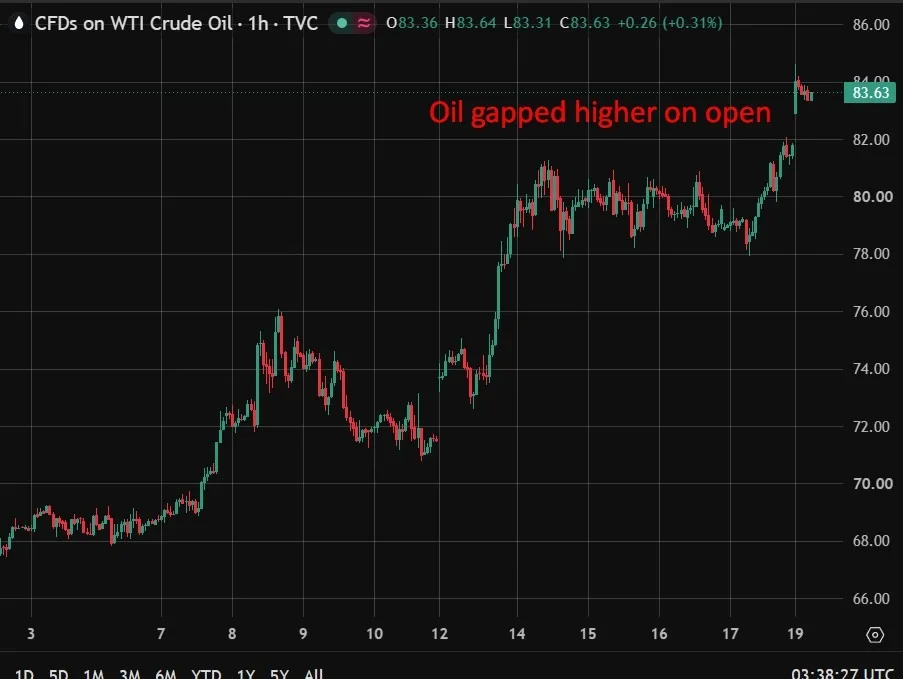
The Strait of Hormuz — the narrow chokepoint through which roughly a fifth of the world's oil supply passes — became a flashpoint overnight as Iran confirmed that two tankers had been mined and destroyed in the waterway. A vessel fire in the strait was also confirmed by the United Kingdom Maritime Trade Operations, adding urgency to what is rapidly becoming one of the most consequential geopolitical crises for global energy markets in years. Oil prices gapped sharply higher at the start of the new trading week, reflecting how quickly the conflict is being priced into commodity markets.
The military escalation is accelerating on multiple fronts. The United States launched its ninth consecutive night of strikes against Iran, with missiles reportedly flying from Kuwait — a signal that the operational tempo is intensifying rather than plateauing. A US official quoted in reporting from the period warned that the Trump administration is actively planning for a broader war with Iran, even as a military build-up continues. That framing — planning for wider conflict rather than managing toward de-escalation — represents a meaningful shift in how Washington appears to be positioning itself.
Read more Adobe Stock Jumps 5.6% But Trades Far Below Estimated Fair Value →
For Asian financial markets, the implications are layered. MUFG analysts warned that rising oil prices are putting direct pressure on Asian currencies, with the Indian rupee identified as particularly vulnerable given India's heavy dependence on energy imports. South Korea's Kospi index, which had been the best-performing major market of 2026, was hit by a separate but compounding wave of chip-stock volatility and ETF unwinding, with Citi issuing further downgrades. Beijing, meanwhile, moved to stabilize its own markets after a brutal slide in Chinese tech stocks, with regulators calling a stability meeting and state buyers reportedly stepping in.
China's central bank decisions added another dimension to the session. The People's Bank of China held its loan prime rates steady — the one-year LPR at 3.0% and the five-year at 3.5% — even as growth slows and the yuan firms. The PBOC also set its USD/CNY reference rate slightly above analyst estimates, a subtle but watched signal of currency management intent. Separately, a Goldman Sachs note suggested China's actual gold accumulation may be more than double official figures, raising questions about Beijing's longer-term reserve strategy amid geopolitical uncertainty.
Continue reading at Forexlive.