Oil Rises 3.5% as US-Iran Conflict Shuts Strait of Hormuz
WTI crude climbs to $73.90 as ongoing US-Iran exchanges and a closed Strait of Hormuz rattle global markets heading into a key US inflation report.
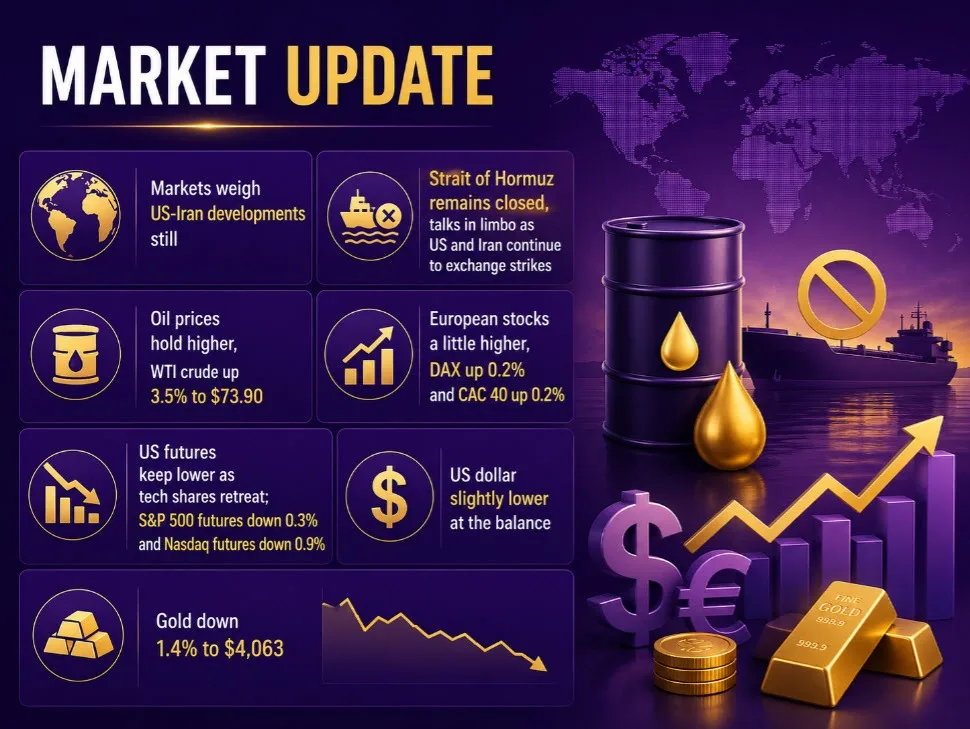
Global markets opened the week in a cautious mood as the escalating standoff between the United States and Iran continued to set the tone across asset classes. With the Strait of Hormuz — one of the world's most critical oil transit chokepoints — effectively halted and both nations still exchanging strikes, the energy market's response was swift and clear: WTI crude gained 3.5%, settling around $73.90 per barrel.
The geopolitical backdrop is compounding an already complex macro environment. Iran's foreign ministry acknowledged that mediators are still working to de-escalate the situation, but Tehran simultaneously reaffirmed it would not honor its commitments under any existing framework as long as Washington fails to do the same. That mutual intransigence makes a near-term diplomatic breakthrough appear unlikely, suggesting oil's elevated price floor could persist.
Read more Adobe Stock Jumps 5.6% But Trades Far Below Estimated Fair Value →
For currency markets, the usual flight-to-dollar dynamic was only partially in play. The euro clawed back from intraday lows, with EUR/USD settling around 1.1430, while sterling stabilized near 1.3390 after an early dip. USD/JPY attracted particular attention, pulling back to 162.10 amid headlines around Japan's Government Pension Investment Fund potentially rebalancing its portfolio — a reminder that domestic institutional flows can complicate the yen's safe-haven narrative even during risk-off episodes.
Equity markets reflected the broader unease without fully capitulating. European stocks held marginally positive ground, while US futures told a more cautious story: S&P 500 futures slipped 0.3% and Nasdaq futures fell 0.9%, with tech shares bearing the brunt of the selling pressure. Treasury yields crept slightly higher to 4.579% on the 10-year, even as gold — typically a geopolitical hedge — fell 1.4% to $4,063, a notable divergence that may reflect profit-taking after recent gains.
Looking ahead, market participants will increasingly shift focus toward the upcoming US CPI report, which Federal Reserve Governor John Williams indicated could influence rate policy directly — he stated he would support rate hikes if monthly core inflation averages above 0.2%. The intersection of geopolitical risk and sticky inflation data could make for a volatile week. Continue reading at Forexlive.