Oil Majors Collected $93 Billion Amid Iran War Tensions
Big oil companies have reaped enormous profits tied to Iran-related conflict. Here's what that means for energy markets.
The world's largest oil companies collectively harvested an estimated $93 billion windfall as geopolitical tensions surrounding Iran rippled through global energy markets, according to reporting from Yahoo Finance. The figure underscores how conflict and the threat of supply disruption can translate almost immediately into outsized profits for integrated oil majors, even when actual production volumes remain relatively stable.
When tensions escalate in or around Iran — one of OPEC's significant producers — traders and markets tend to price in a risk premium on crude. That premium inflates benchmark prices, and because major oil companies sell output at or near those benchmarks, their revenue per barrel climbs sharply without any corresponding rise in extraction costs. The result is a margin expansion that flows directly to the bottom line, rewarding shareholders while consumers absorb higher fuel prices at the pump.
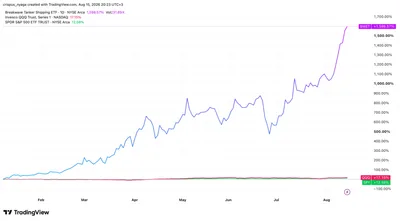
Read more BWET ETF Surges 1,600% in 2026 Amid US-Iran Conflict →
The $93 billion figure invites a broader analytical question: to what extent do energy supermajors structurally benefit from geopolitical instability, and does that create perverse incentives in how the industry engages with policymakers? Critics have long argued that the concentration of pricing power among a small number of integrated majors means that almost any supply shock — real or anticipated — disproportionately enriches producers rather than being absorbed across the supply chain.
For investors, the windfall reinforces oil and gas equities as a geopolitical hedge, a role they have played with increasing prominence since Russia's invasion of Ukraine sent energy prices surging in 2022. For policymakers, the numbers add fresh urgency to debates about windfall profit taxes and strategic reserve deployments as tools to blunt the consumer impact of conflict-driven price spikes.
The episode is a sharp reminder that in commodity markets, uncertainty itself has a price — and the largest producers are almost always positioned to collect it. Continue reading at Yahoo Finance.