Oil Edges Higher as Strait of Hormuz Closure Keeps Markets Wary
WTI crude gains 0.7% amid ongoing US-Iran tensions, while European stocks and US futures drift with little conviction heading into the weekend.
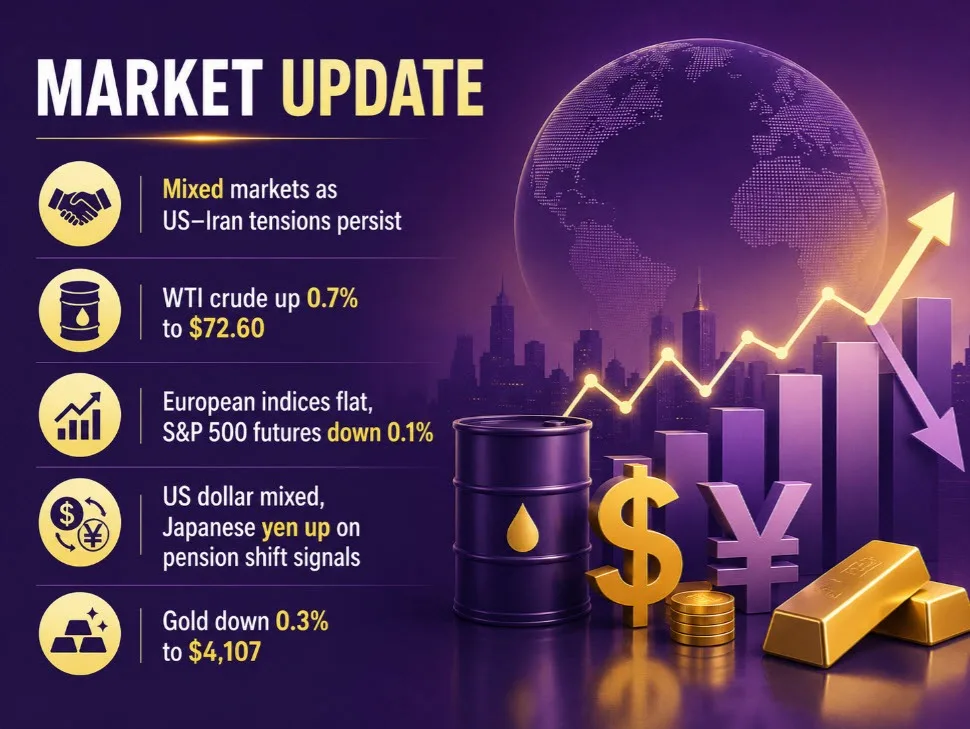
Global oil markets ended the week on a cautious note, with WTI crude rising 0.7% to $72.60 per barrel as the Strait of Hormuz remained effectively closed — a chokepoint that handles a significant share of the world's seaborne oil traffic. A US official's suggestion that diplomatic talks between Washington and Tehran could still happen offered a flicker of optimism, but the physical reality of disrupted flows through the strait continues to underpin prices. According to the International Energy Agency, global oil supply did recover 4.1 million barrels per day in June as Hormuz flows partially resumed, yet output still lagged pre-war levels by 9.4 million bpd — a gap that underscores how consequential a prolonged closure would be.
Beyond energy markets, the session was notably subdued. European equity indices closed largely flat and mixed, while S&P 500 futures slipped 0.1% and Nasdaq futures shed 0.3%, with technology shares showing mild weakness. The muted price action reflects a market in a holding pattern: investors digesting a week of geopolitical headlines without yet drawing firm conclusions about their medium-term implications.
Read more Adobe Stock Jumps 5.6% But Trades Far Below Estimated Fair Value →
The Japanese yen was the standout currency mover of the day, with USD/JPY falling 0.3% to 161.80 after Japan signaled a major pension reallocation — a structural shift that can generate significant demand for yen assets. Elsewhere in foreign exchange, the dollar was broadly unchanged, with EUR/USD flat at 1.1430 and GBP/USD barely moving. On the rates side, US 10-year Treasury yields edged up just 0.6 basis points to 4.547%, suggesting bond traders are not pricing in dramatic near-term shifts in Federal Reserve policy. Gold slipped 0.3% to $4,107, while Bitcoin rose 1.7% to $64,368, adding a risk-appetite wrinkle to an otherwise directionless session.
Looking ahead, the primary macro catalyst on the horizon is the US Consumer Price Index report for June, due July 14. With interest rate expectations already in flux following this week's developments — and the Bank of Japan expected to hold rates steady at its July meeting while maintaining tightening guidance — the CPI print could meaningfully recalibrate the outlook for both the Federal Reserve and global risk assets. French inflation fell in June while German headline CPI held at 2.3%, together offering mild relief to the European Central Bank as it navigates its own rate path.
Continue reading at Forexlive.