MercadoLibre's Growth Bet: Weighing the Long-Term Payoff
MercadoLibre is doubling down on expansion across Latin America, but investors must weigh heavy spending against future returns.

MercadoLibre has long positioned itself as the dominant force in Latin American e-commerce and fintech, and its latest strategic moves suggest the company is leaning further into that identity rather than retreating toward near-term profitability. The company's willingness to absorb substantial investment costs reflects a calculated wager: that the region's underpenetrated digital economy will reward patience more generously than restraint.
The core tension for investors is familiar in high-growth tech narratives — present-day margin compression traded against the promise of outsized future returns. MercadoLibre operates across a vast and demographically young region where internet adoption, smartphone penetration, and financial inclusion are all still accelerating. That structural backdrop gives the company's spending a rationale that purely mature-market peers cannot easily claim.
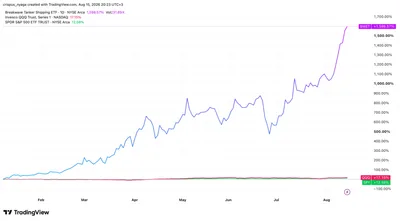
Read more BWET ETF Surges 1,600% in 2026 Amid US-Iran Conflict →
Yet the risks are equally structural. Currency volatility across Brazil, Argentina, and Mexico can erode reported earnings regardless of operational performance. Regulatory environments in these markets shift unpredictably, and competition — both from global giants and nimble local players — is not standing still. The company's fintech arm, Mercado Pago, adds another layer of complexity, operating in a space where trust, regulation, and network effects all matter enormously.
What makes MercadoLibre a genuinely interesting analytical case is that the bull and bear arguments both rest on the same foundation: scale. Bulls argue the company is building moats that will prove nearly impossible to dismantle once regional digital infrastructure matures. Bears counter that the path to that destination is long, expensive, and littered with macro hazards that management cannot control. Neither side is wrong, which is precisely what makes the valuation debate so persistent.
For investors with long time horizons and tolerance for emerging-market volatility, MercadoLibre represents a thesis rather than a trade. The question is not whether Latin America's digital economy will grow — it almost certainly will — but whether MercadoLibre will capture that growth efficiently enough to justify today's price. Continue reading at Yahoo Finance.