KLA Corp Holds Dividend Amid Debate Over Its True Value
KLA affirmed a $0.23 quarterly dividend as analysts debate whether the chipmaker is undervalued or stretched on earnings multiples.
KLA Corporation (KLAC) has confirmed it will pay shareholders a quarterly cash dividend of US$0.23 per share, a move that signals management confidence even as the stock has experienced a recent pullback. For income-oriented investors, the dividend affirmation offers a degree of stability in a sector known for its cyclical swings.
Despite the near-term price softness, KLA has built notable momentum over the past twelve months, a trajectory that mirrors broader optimism in the semiconductor equipment space. Much of that enthusiasm traces back to surging artificial intelligence infrastructure spending, which has lifted demand expectations for chipmaking tools — the core of KLA's business.
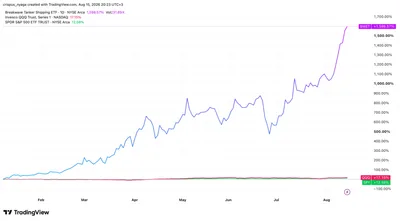
Read more BWET ETF Surges 1,600% in 2026 Amid US-Iran Conflict →
Yet the valuation picture is genuinely contested. One analytical framework places KLA roughly 12.4% below its intrinsic value, suggesting the recent dip may represent a buying opportunity for patient investors. The counter-argument is harder to dismiss: KLA's price-to-earnings ratio sits meaningfully above the industry average, a premium that could compress sharply if earnings growth disappoints or the AI-driven capital expenditure cycle moderates.
The tension between those two views — undervalued asset or overextended multiple — captures a broader challenge facing semiconductor equipment stocks right now. Strong secular tailwinds from AI coexist with rich valuations that leave little margin for error. For KLA specifically, the dividend affirmation may function as a confidence signal, but it does not resolve the underlying question of whether the market has already priced in the best-case scenario.
Investors weighing a position in KLA would do well to consider both narratives carefully rather than anchoring on either the discount-to-intrinsic-value argument or the elevated P/E concern in isolation. Continue reading at Simply Wall Street.