Iran-US Military Strikes Escalate as Oil Markets Hold Steady
US cruise missiles hit Iranian infrastructure as Tehran retaliates against Gulf bases, yet oil prices show surprising restraint amid rising conflict signals.
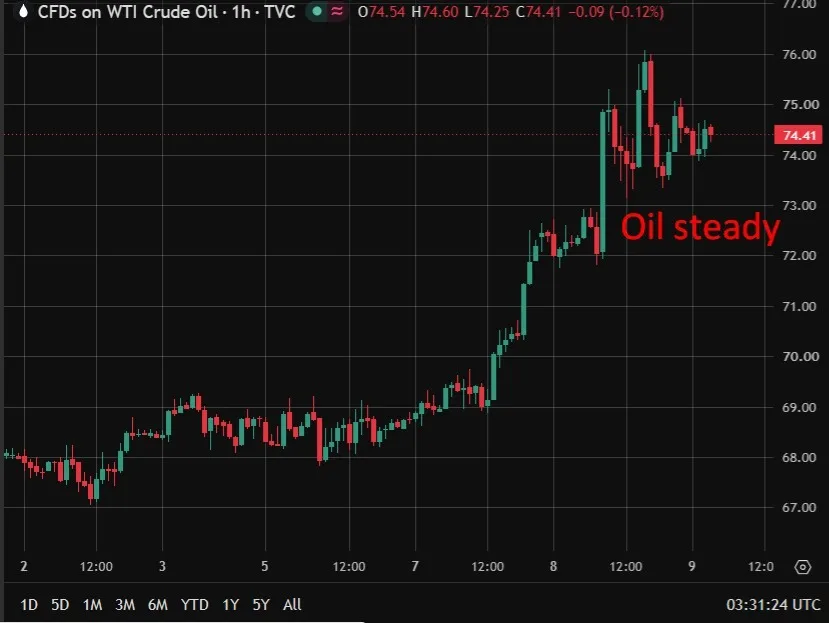
The confrontation between the United States and Iran entered a dangerous new phase during the Asia-Pacific trading session, with Washington striking two railway bridges in Iran's Golestan province using cruise missiles — marking the first US attack on Iranian infrastructure since a ceasefire lapsed. CENTCOM simultaneously confirmed strikes against roughly 90 Iranian coastal military targets, encompassing air defense systems, missile and drone storage facilities, naval forces, and logistics networks. The scope of the operation signals a deliberate escalation beyond previous exchanges, targeting the logistical backbone of Iran's military posture rather than frontline assets alone.
Tehran's response was swift and pointed. Iran's Islamic Revolutionary Guard Corps vowed retaliation for the bridge strikes, while Parliament Speaker Ghalibaf issued a stark warning linking the Strait of Hormuz's status directly to the conflict's trajectory — a threat that carries enormous implications for global energy supply chains, given that roughly 20% of the world's traded oil passes through that chokepoint. Iranian forces launched missiles targeting Bahrain and Kuwait, where US military bases are located, triggering air-raid sirens across the Gulf.
Read more Adobe Stock Jumps 5.6% But Trades Far Below Estimated Fair Value →
Despite the gravity of the military exchanges, oil markets displayed an unexpectedly muted reaction. After an earlier session surge of roughly 7% tied to reports of potential strikes on Kharg Island — Iran's primary oil export terminal — prices stabilized rather than sustaining those gains. This disconnect between geopolitical intensity and commodity price movement suggests that markets may be pricing in the diplomatic channel that appeared alongside the military one: President Trump stated that Iranian officials had reached out seeking a deal, a claim reported by Axios that introduces uncertainty about the conflict's duration and ultimate scope.
Elsewhere in the Asia-Pacific session, regional economic data added texture to an already volatile backdrop. China's factory-gate inflation hit a four-year high even as consumer prices undershot expectations, coming in at 1% year-over-year against a 1.2% forecast. South Korea's central bank flagged a potential rate hike as domestic inflation ran at its hottest pace in years. Meanwhile, chipmaker stocks lifted both the Kospi and Nikkei, demonstrating that equity markets are compartmentalizing geopolitical risk from sector-specific momentum — at least for now. The PBOC set its USD/CNY reference rate slightly weaker than estimates, a subtle signal worth watching if tensions continue to pressure risk sentiment.
Continue reading at Forexlive.