Intervention Threat Holds Yen Below Key Level as BOJ Hikes Fail
MUFG warns verbal intervention and BOJ tightening are slowing yen weakness but not reversing it, with joint US-Japan action emerging as the wildcard.
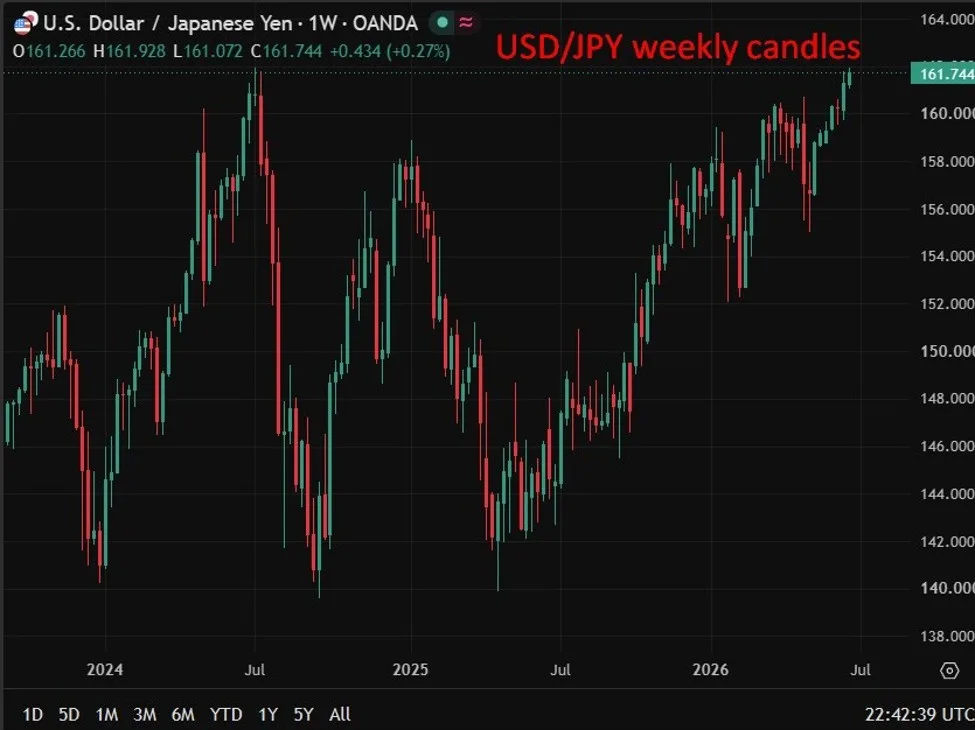
The Japanese yen is caught in an uncomfortable equilibrium: weak enough to keep Tokyo on edge, yet held just below a critical threshold by the credible threat of intervention rather than the reality of it. According to a note from MUFG, USD/JPY has remained below the July 2024 peak of 161.95, a level that appears to function as an implicit line in the sand for Japanese authorities. The problem is that the market is respecting the boundary while continuing to grind the yen lower — a dynamic that reflects the limits of threat-based currency management.
The Bank of Japan's most recent rate hike has done little to change the underlying trend. Japanese rate markets are now pricing roughly 16 basis points of additional tightening by October, with BOJ meeting minutes showing some board members may be ready to propose another hike as early as September. Yet that repricing has generated no meaningful yen recovery, suggesting structural selling pressure is overpowering the rate differential argument. When tighter monetary policy fails to lift a currency, it signals that capital flows or risk appetite dynamics are doing heavier work than the central bank can easily offset.
Read more Microsoft, Visa, and Apple Stand Out as Long-Term Holds in Mid-2026 →
What has captured market attention is the diplomatic dimension. Japanese Finance Minister Katayama, following a call with US Treasury Secretary Scott Bessent, described the two nations as increasingly aligned on foreign exchange policy and said both sides had agreed to take bold steps on currencies if warranted. MUFG noted that language has stoked speculation about possible joint intervention — a coordinated move not seen since March 2011, when the US and other G7 partners stepped in alongside Japan in the immediate aftermath of the earthquake and tsunami. That episode was a response to an acute, singular shock; whether Washington would participate under current market conditions is a fundamentally different question.
The stakes of that distinction are high. Unilateral Japanese intervention has a track record of producing short-term yen spikes that gradually fade as markets reassert their directional view. Joint action, by contrast, carries outsized signaling power precisely because it is rare and requires multilateral political alignment. If markets come to believe the US is genuinely prepared to act alongside Tokyo — rather than simply offering diplomatic cover — the threat premium embedded in current USD/JPY levels could harden into a more durable ceiling. For now, Tokyo appears to be banking on that ambiguity doing the work that its central bank and its own reserves have so far been unable to accomplish alone.
Continue reading at Forexlive.



