How Colonial-Era Language Still Shapes U.S. Policy Debates
The phrase 'merciless Indian Savages' in the Declaration of Independence continues to cast a long shadow over Indigenous policy and national identity.
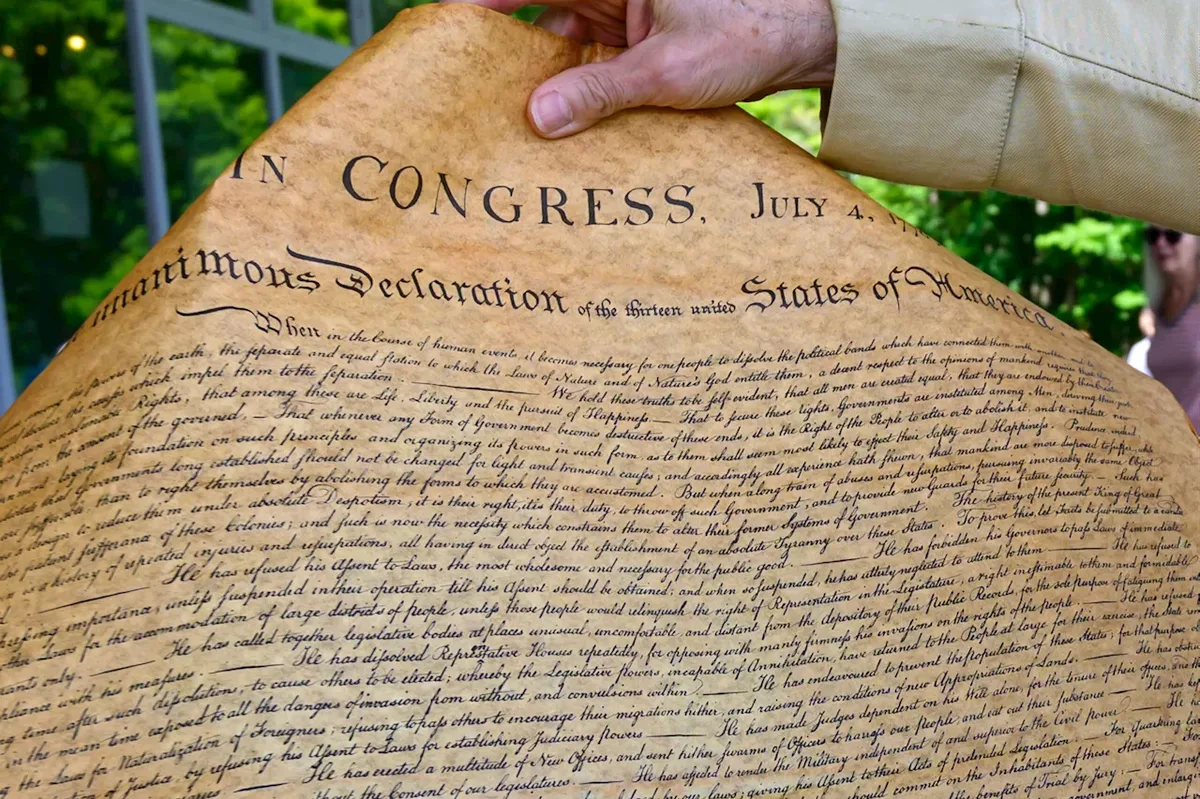
Every Fourth of July, Americans celebrate the Declaration of Independence as a founding testament to liberty and equality. Yet embedded within that same document is a phrase that historians and Indigenous scholars have long flagged as a profound contradiction: the reference to 'merciless Indian Savages' as a grievance against the British Crown. That language was not rhetorical accident — it reflected and reinforced a worldview that categorized Native peoples as obstacles rather than sovereigns.
The staying power of such rhetoric is more than a matter of historical embarrassment. Scholars who study the intersection of law and Indigenous rights argue that dehumanizing framings embedded in foundational texts have downstream consequences, shaping judicial interpretations, federal trust responsibilities, and public attitudes toward tribal sovereignty for generations. When a democracy's birth certificate contains explicit othering language, that framing does not simply vanish with the passage of time.
Read more ECB Official Makes Case for Digital Euro as EU Sovereignty Tool →
Modern policy debates over land rights, treaty obligations, and tribal governance still carry echoes of these early assumptions. Critics contend that federal agencies and courts have at times defaulted to paternalistic stances toward tribal nations — stances that, whether consciously or not, trace their intellectual lineage back to the colonial-era premise that Indigenous peoples required management rather than recognition as co-equal governments.
Independence Day thus presents a dual lens for many Native Americans: a national celebration that simultaneously commemorates a document codifying their ancestors' dehumanization. Advocacy groups and scholars use the occasion to press for honest historical reckoning, arguing that genuine reconciliation requires confronting — not papering over — the contradictions baked into America's founding mythology.
The conversation is part of a broader national reassessment of how origin stories are told and who gets to shape them. Understanding that history is not a prerequisite for cynicism about American ideals, but rather for the more demanding work of making those ideals genuinely universal. Continue reading at headtopics (truthout).