Figma vs. IBM: What Revenue Trends Reveal About Each Company
A comparison of Figma and IBM illuminates how growth trajectories differ between an emerging design platform and an established AI giant.
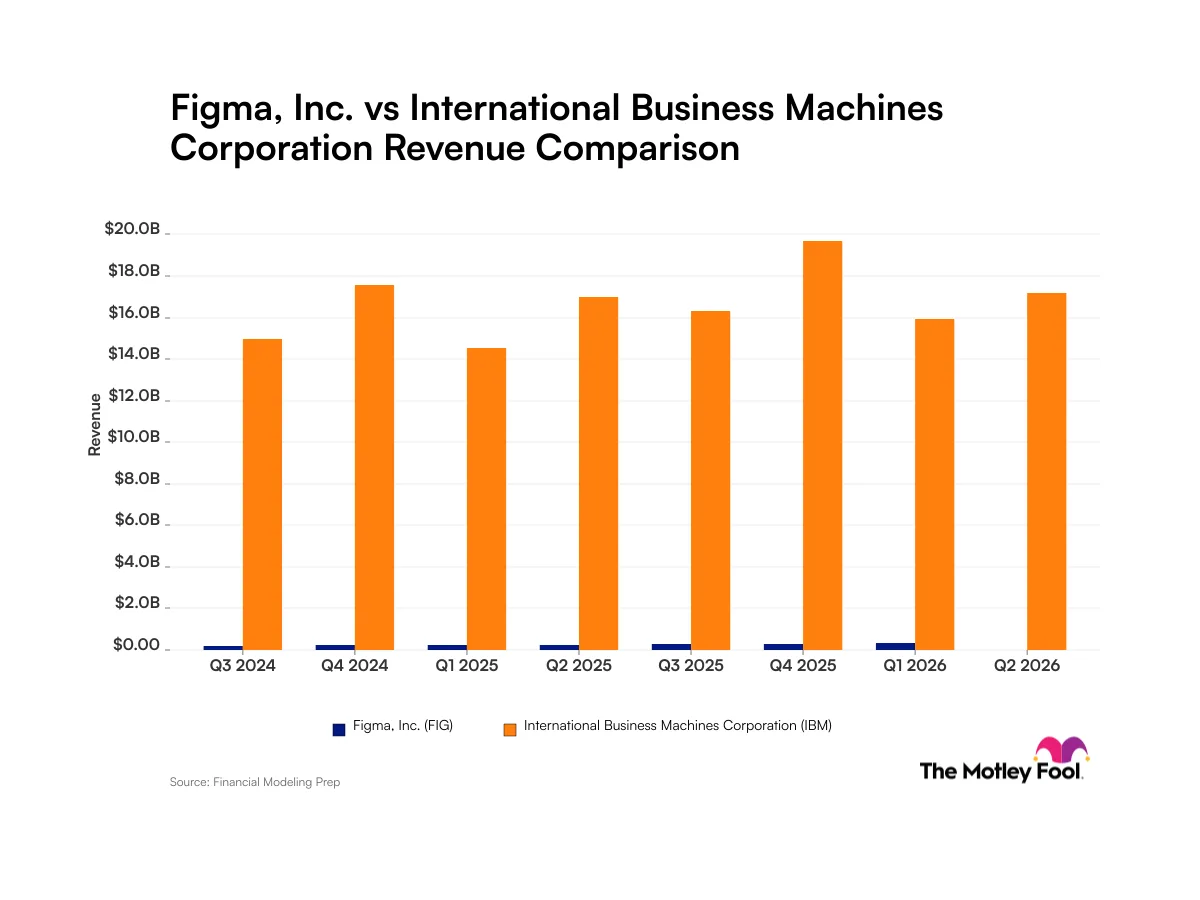
When investors weigh a fast-growing software upstart against a decades-old technology conglomerate, revenue trajectory becomes one of the most telling signals available. Figma, the cloud-based collaborative design platform that famously escaped a blocked acquisition by Adobe, represents a new generation of software companies built around product-led growth and a sticky, subscription-driven user base. IBM, by contrast, has spent years restructuring itself around hybrid cloud and artificial intelligence, shedding legacy hardware divisions in an effort to reclaim relevance in an enterprise market that has fundamentally shifted beneath it.
The contrast in growth profiles between the two companies speaks to broader dynamics in the technology sector. Younger software firms like Figma tend to post higher percentage revenue growth from a smaller base, fueled by rapid adoption among design and product teams at companies of all sizes. IBM's growth story is more measured — the company's scale means that even modest percentage gains translate into billions of dollars, but investors expecting hypergrowth are likely to be disappointed. What IBM offers instead is durability, dividend income, and an expanding AI portfolio anchored by its watsonx platform.
Read more Adobe Stock Jumps 5.6% But Trades Far Below Estimated Fair Value →
For investors, the choice between a company like Figma and one like IBM is ultimately a question of risk tolerance and time horizon. Figma's growth rate signals strong market demand for collaborative design tooling, but as a private company preparing for a potential public offering, its valuation and financials carry inherent uncertainty. IBM's numbers, while less dramatic, come with the transparency and institutional track record that risk-averse portfolios often require. The AI pivot IBM has undertaken is still being tested by the market, and whether watsonx can genuinely compete with newer entrants remains an open question.
Analysts watching both companies would do well to look beyond top-line revenue and examine net revenue retention, operating margins, and the pace of enterprise contract wins. These metrics, more than headline growth figures, will ultimately determine whether Figma can justify a premium valuation at IPO and whether IBM's transformation is delivering compounding returns or merely stabilizing a legacy business. The divergence between the two companies is a useful lens for understanding how the software industry is aging — and where the next wave of value creation is likely to emerge.
Continue reading at Yahoo Finance.