Club Exits Spin-Off Position After Credibility Takes a Hit
A disappointing debut earnings report forces an exit from a spin-off trade that failed to deliver on early promise.

Investing in corporate spin-offs carries an inherent wager: that a newly independent company, freed from the constraints of its former parent, will unlock hidden value and outperform the broader market. When that thesis breaks down at the first earnings report, the damage extends well beyond a single quarter's numbers — it strikes at the foundation of investor confidence that young standalone companies desperately need to establish.
That is precisely the situation at hand. After a disappointing initial earnings release, the decision was made to exit the position entirely rather than wait through what could be a prolonged credibility-rebuilding process. The logic is straightforward — restoring trust with Wall Street analysts and institutional shareholders after a stumble out of the gate is rarely a quick undertaking, and capital has a cost while you wait.
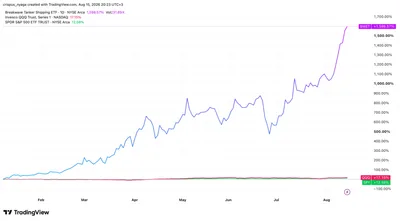
Read more BWET ETF Surges 1,600% in 2026 Amid US-Iran Conflict →
Spin-off investing has long been a favored strategy among value-oriented managers, partly because newly separated entities are often dumped indiscriminately by index funds and former-parent shareholders who have no interest in holding a smaller, unfamiliar company. That forced selling can create attractive entry points. But the flip side of that opportunity is concentration risk: if the business fundamentals disappoint before a new shareholder base has fully formed, there is little institutional support to cushion the decline.
The broader lesson here is one of position-sizing discipline and thesis monitoring. A spin-off play is essentially a turnaround thesis compressed into a shorter time frame — the clock starts ticking from day one of independent trading. When the first major data point contradicts the original investment case, the rational response is to reassess quickly rather than anchor to an earlier, more optimistic view of the company's trajectory. Holding through deteriorating fundamentals in hopes of a recovery that may take years to materialize is a form of sunk-cost thinking that experienced portfolio managers work actively to avoid.
Continue reading at CNBC.